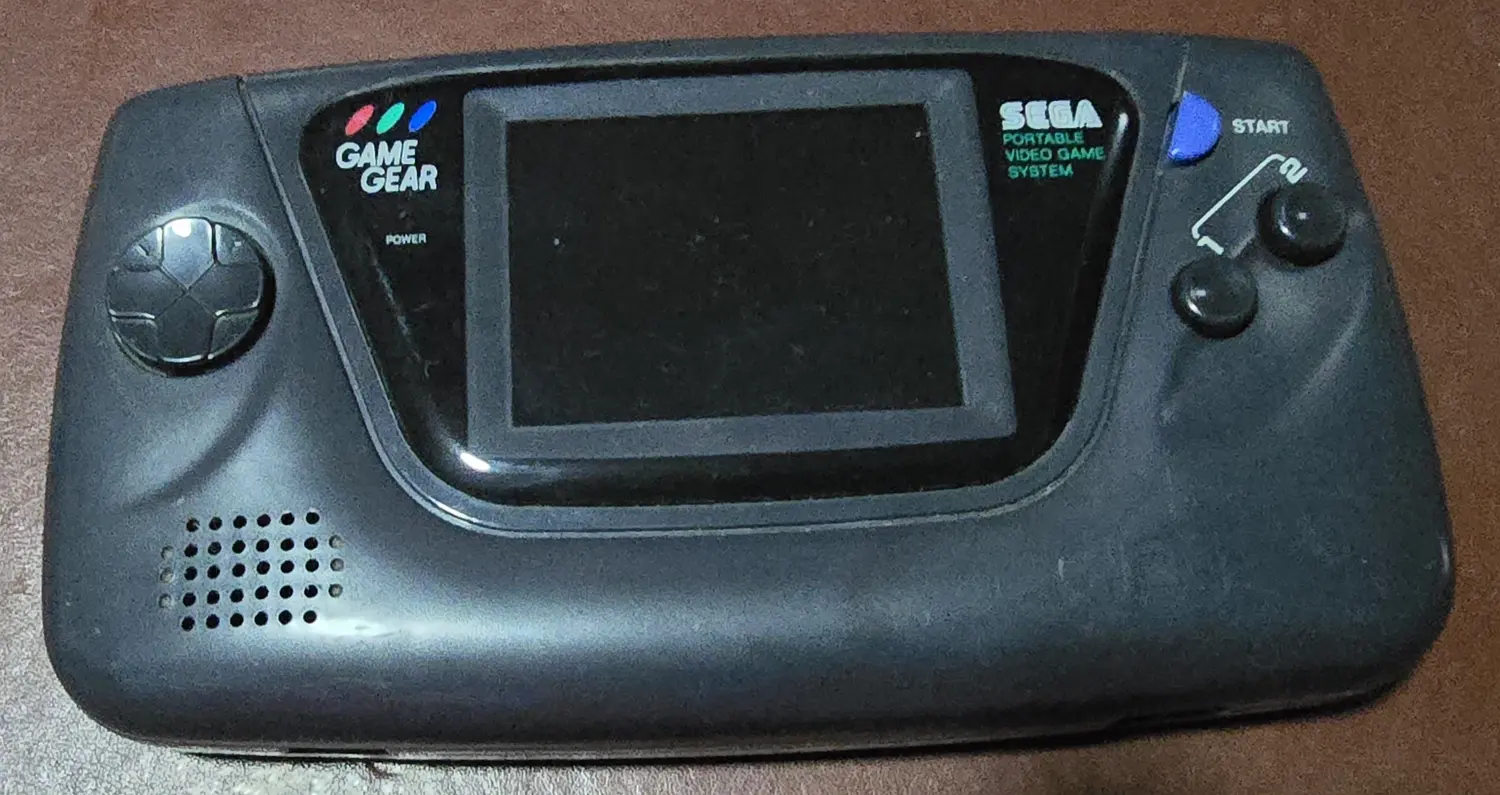
Sega Game Gear, Fully Recapped, Original Screen - USB-C Power & Three Games
One specific Game Gear, serial 031911785: its original screen working properly, three real cartridges, and USB-C power that plugs in rather than replaces anything. No mods, all nostalgia.
$200.00
Adding games or accessories to a bundle? Take 20% off, or 35% when you add three or more.
A real Game Gear, working the way it actually worked
This is the one for someone who wants the machine, not a modernized version of the machine. Original Sega LCD. Original shell. Original battery doors. You switch it on and you get the saturated colors, the visible pixel grid, and the slightly-too-narrow viewing angle that everyone who owned one in 1991 remembers, because that is what a Game Gear looks like. Sega’s handheld was the one with the color screen when the competition was green-on-greener, and thirty years later that still lands.
It comes with three real cartridges, and they were picked to show the machine off rather than to pad the box:
- The Lion King was the top-selling Game Gear game in the US the month it came out, December 1994. Here is the part people get wrong: the version with the murderous reputation, the giraffe-hopping level that ate a generation’s afternoons, is the SNES and Genesis one. This handheld port was deliberately made gentler. It is the Lion King you can actually finish.
- G-LOC: Air Battle is the pocket edition of one of the most ridiculous machines Sega ever built: the arcade R360, a cage that rotated a full 360 degrees on two axes and would happily hold you upside down to match the plane on screen. Sega thought enough of G-LOC to bring it back on the Sega Ages line for Switch in 2020.
- The Majors Pro Baseball has the players' association license but not the team license, so Clemens and Bonds and Canseco are all present and playing for cities rather than franchises. It battery-saves a full 162-game season. The umpire’s calls have a Japanese accent, which is the developer’s fingerprint showing through.
Could you put a flash cart in this and have the entire library on a memory card? Yes, and I sell those. But that is a different pleasure. Blowing on a cartridge, sliding it in, and hearing the Sega chime out of a speaker that has been doing it since 1991 is the point of this particular listing.
No AA batteries and no USB-C charger are included. The adapter takes any ordinary cable you already own.
Three is a starting point, not a limit. Anything else on the shelf goes in the same box on one shipping charge, and every cartridge is tested in a real console before it ships. Super Columns was the North American pack-in and is the natural fourth. Mortal Kombat is the one people are surprised the Game Gear ran at all. And the Flash Gear Pro+ flash cart is there if you want the whole library alongside the real carts.
If you want it modernized, I have those too
Nothing here is a criticism of the mods. They are genuinely better to use, and if that is what you are after, buy this one instead and be happier with it:
- Game Gear IPS + Built-in USB-C has a bright IPS panel, a USB-C port fitted where the barrel jack was, and a flash cart. Modern in every way that matters.
The reason this one exists is that making a Game Gear pleasant to use in 2026 normally means replacing the screen, and replacing the screen means the machine is no longer the machine. This one still is.
Modern power that does not modify anything
The included Console Artisan CA-DGG1 adapter plugs into the console’s own DC jack and runs it from any USB-C source: phone charger, power bank, laptop port. No USB-PD negotiation required, so it is not fussy about what it is plugged into.
That is the whole design goal. Nothing inside the console is altered, so it stays original, and six AA batteries still work whenever you feel like it. Six AAs got you three to five hours in 1991, which is why so many of these were played tethered to a wall socket. The tether is now a USB cable you already own.
The gory repair details
I bought this one as somebody else’s botched recap. That is the history, and there is physical evidence for it: the axial fuse is routed over the black rubber grommet rather than under it, which is an assembly-order tell that someone had the shell open before me. So I redid the capacitor work properly.
All three boards, and I will tell you exactly what went where. Ceramic capacitors on the main board and on the sound board. On the power board, a Panasonic FP 820uF 6.3V for the bulk position, a low-ESR part chosen for the job rather than the cheapest thing that fit the footprint. You can read the Panasonic marking in the last photo. Recap claims are easy to make and hard to check, so I photographed mine.
This matters because the surface-mount capacitors Sega used are a wear item, not a possibility. They are the reason most surviving Game Gears are dim, silent or dead, and a console that has not had this done is a console on a timer.
The battery contacts are clean. No corrosion, no green bloom, springs bright. Photo 7 shows both bays with the doors off. Leaked alkaline kills more of these than anything else, and this one never had it.
Condition and what I tested
Cosmetically it is a used handheld from 1991. Light scuffing and fine scratches on the shell, visible in the edge photos above. Nothing cracked, nothing missing, and nothing polished to hide its age.
Tested: screen, sound through the speaker and the headphone jack, every button, the brightness and volume wheels, the cartridge slot, and the DC jack, on both battery power and the included adapter.
I do not bench-test these, I play them. A quick power-on tells you a console boots. It does not tell you that the d-pad still registers a diagonal in the middle of a jump, that button 1 does not need a second press when you are actually leaning on it, or that the sound holds up over an hour instead of a minute. So each of these gets played, with a real cartridge, for long enough to find the faults that only show up under use. Everything on that list works reliably, not marginally. The three cartridges in this bundle are what I played it with.
The back of the Majors cart carries a small printed code sticker applied at some point before I owned it. It is cosmetic and does not affect play. Photo 9 shows it.
About the maker
I’m an electrical engineer and long-time hobbyist with a passion for vintage electronics, especially classic video games. The items I sell are projects from my personal workshop. Everything is guaranteed working on arrival and in the state described. Thanks for looking.
Specifications
| Console | Sega Game Gear, model 2110 (North America), board revision VA1 (837-9024), serial 031911785 |
|---|---|
| Cosmetic | Good used condition with light scuffing and fine scratches on the shell consistent with age. See photos. |
| Games | Three authentic Sega cartridges, graded on my condition scale (consoleartisan.com/condition/): The Lion King (Near Mint), G-LOC Air Battle (Near Mint), The Majors Pro Baseball (Good: patchy shell discoloration; its code sticker on the bare back shell is shown in the photos and comes off on request) |
| Mods | None. No IPS, no internal USB-C, no reshell. Original shell, screen, battery doors and EXT port cover. |
| Power | Console Artisan CA-DGG1 USB-C adapter included; the console also still runs on 6x AA |
| Recap | All three boards recapped by me: ceramics on the main and sound boards, a Panasonic FP low-ESR electrolytic on the power board bulk |
| Screen | Original Sega LCD, working correctly. Not an IPS or backlight conversion. |
| Whats Not Included | AA batteries and a USB-C cable or charger are not included |
Similar items
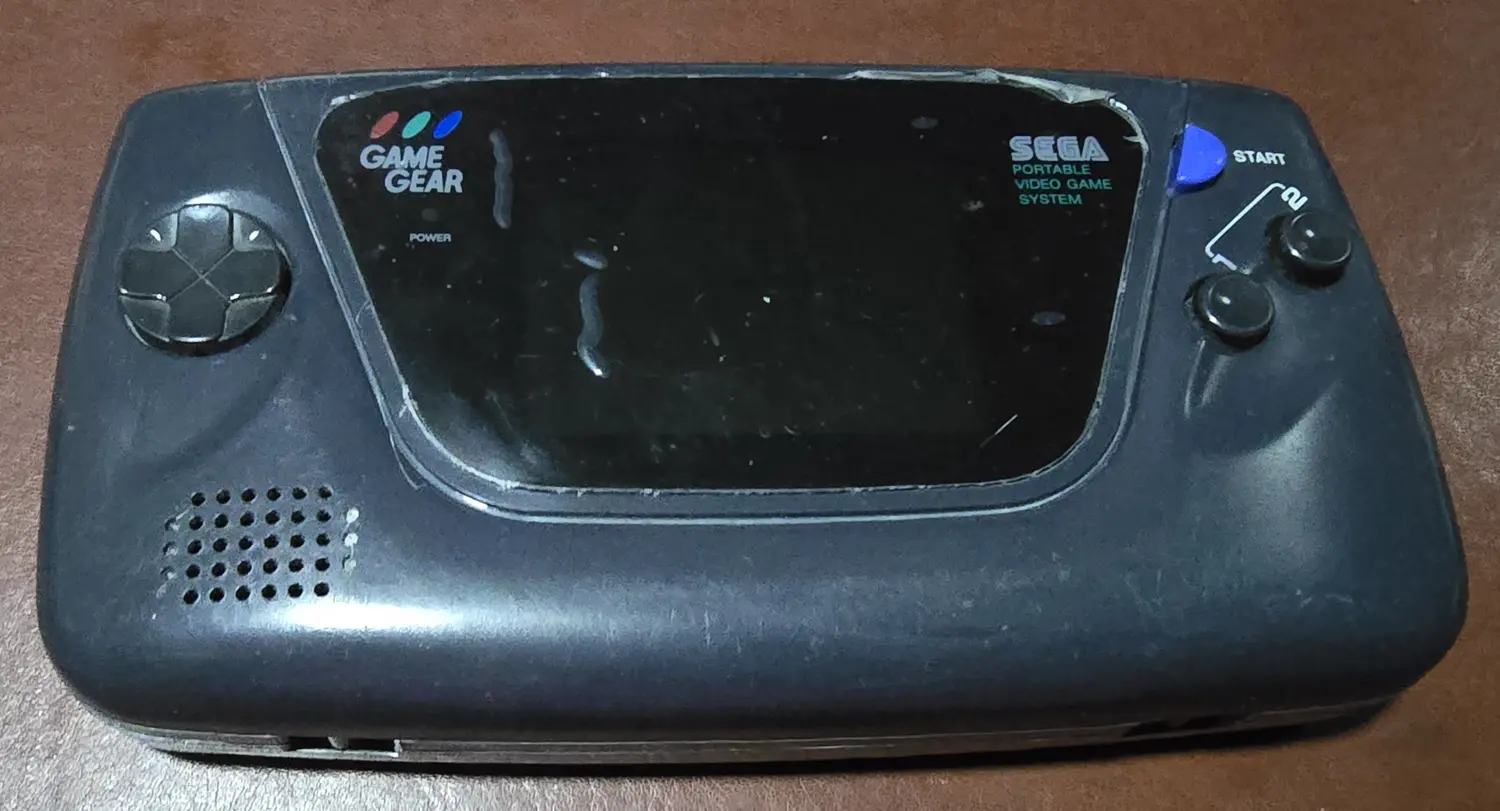
Game Gear IPS + Built-in USB-C - Modded Sega Game Gear with Flash Cart
One specific Game Gear, serial 031143350: a bright IPS panel, a USB-C port where the barrel jack used to be, and a flash cart with the whole library on it.
$230.00
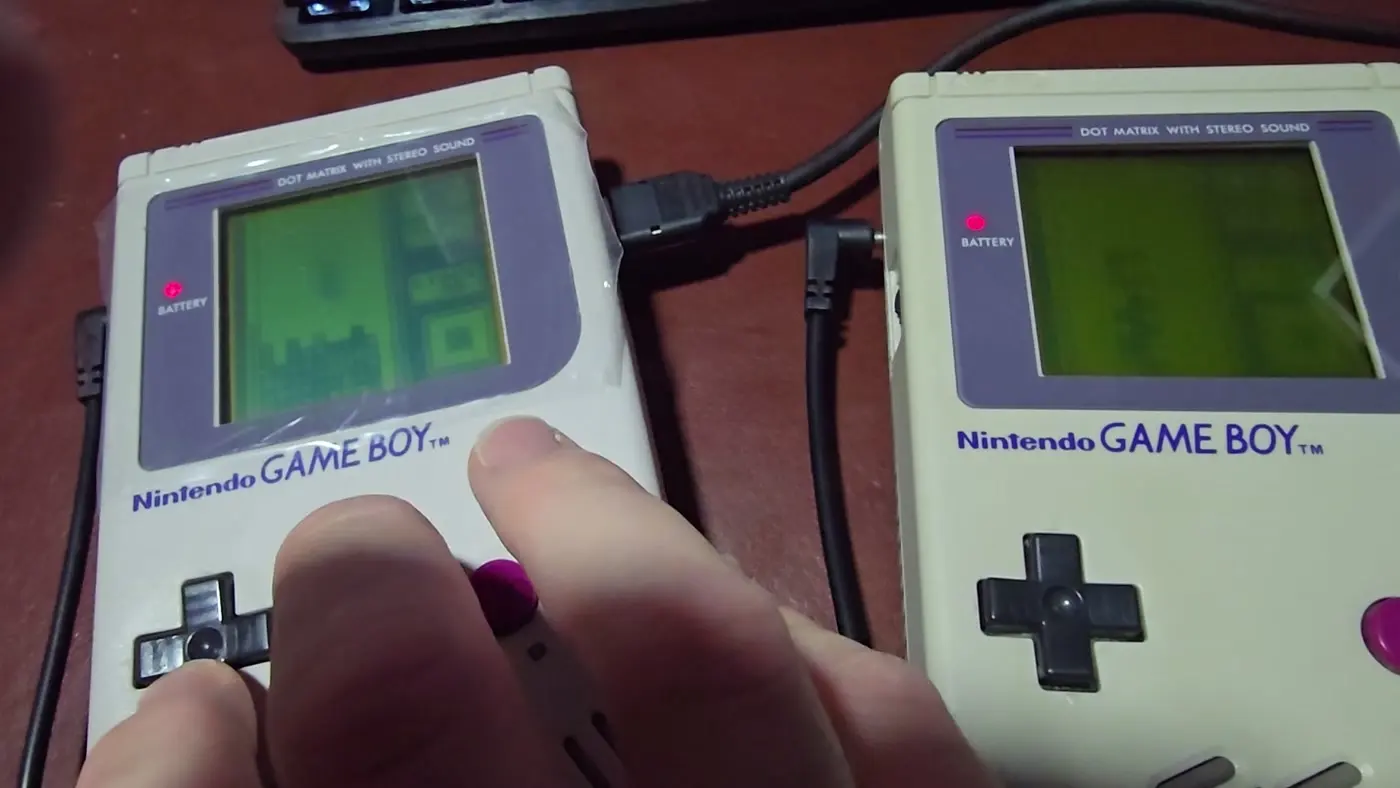
Game Boy Head-to-Head Bundle - Two Restored DMG-01s, Tetris, Link Cable & Flash Cart
Two restored original Game Boys, a genuine Nintendo link cable, and Tetris. The exact setup Nintendo built the link cable for in 1989, assembled and tested as a pair.
$350.00
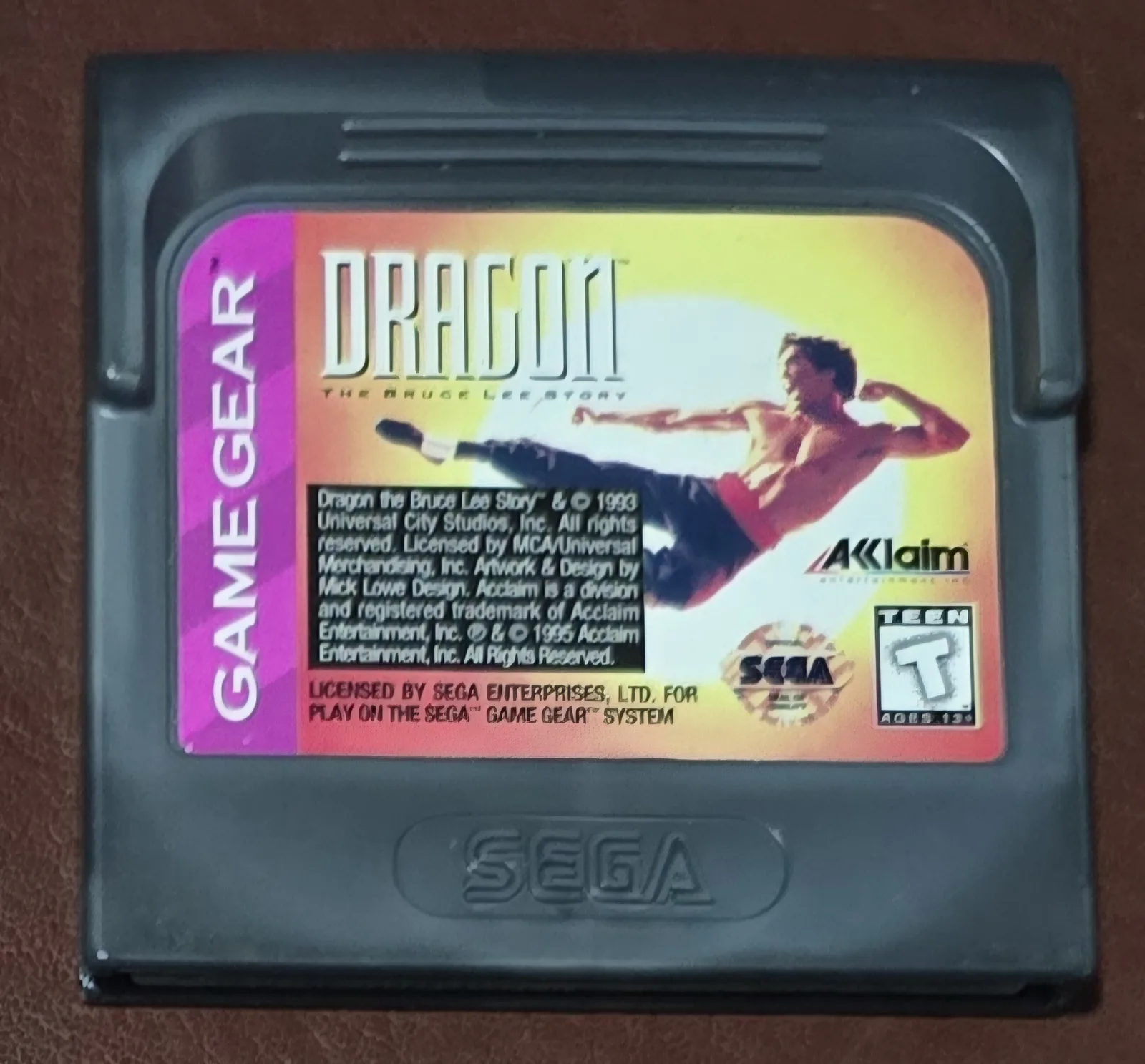
Dragon: The Bruce Lee Story (Game Gear) - Authentic Sega Cartridge, Tested & Cleaned
The official Bruce Lee movie tie-in, reworked into a handheld brawler. Region-free, tested and cleaned, pick your condition grade.
$25.00
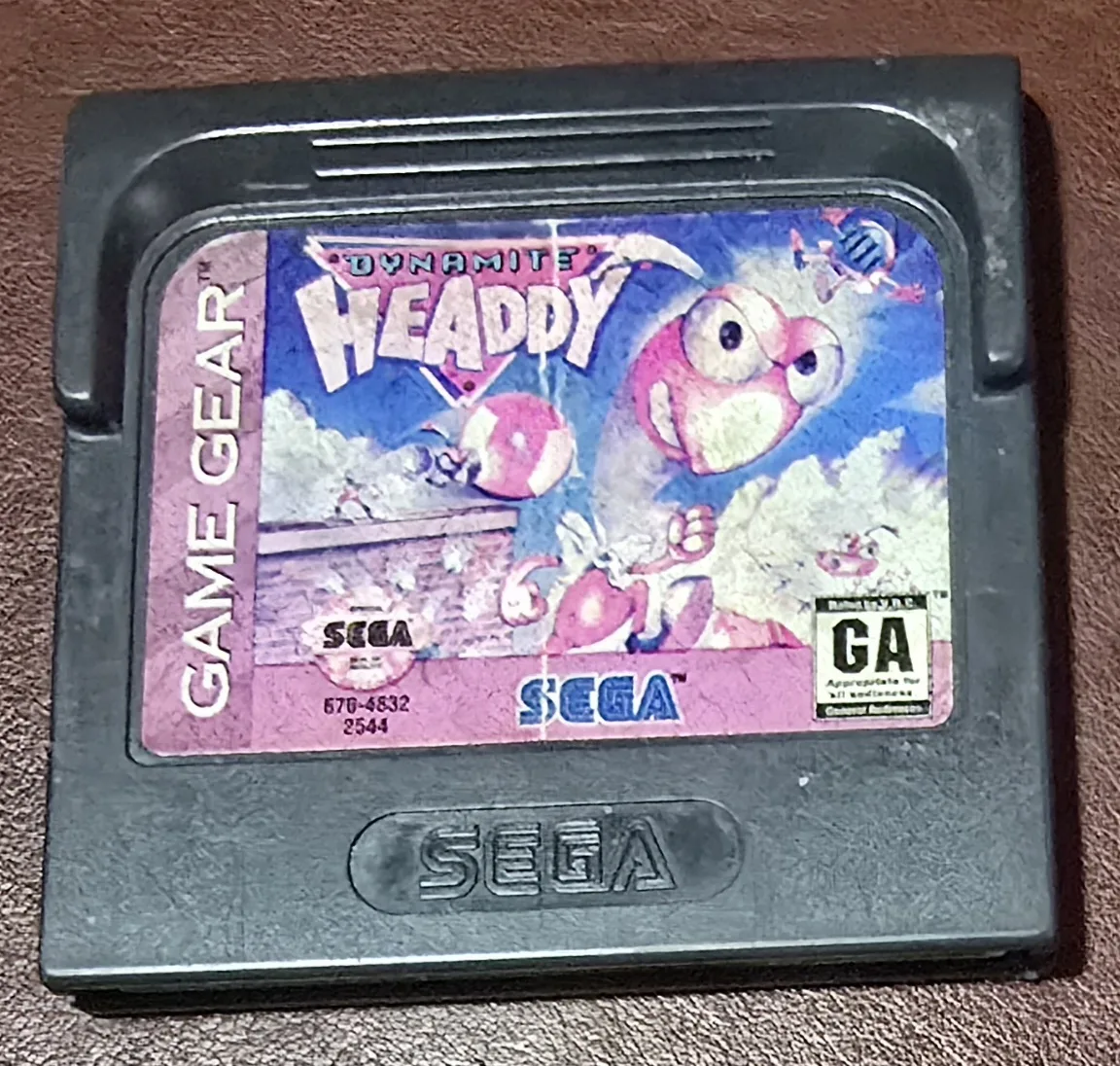
Dynamite Headdy (Game Gear) - Authentic Sega Cartridge, Tested & Cleaned
The 8-bit cut of Treasure's cult-classic mascot platformer. Region-free, tested and cleaned, pick your condition grade.
$40.00