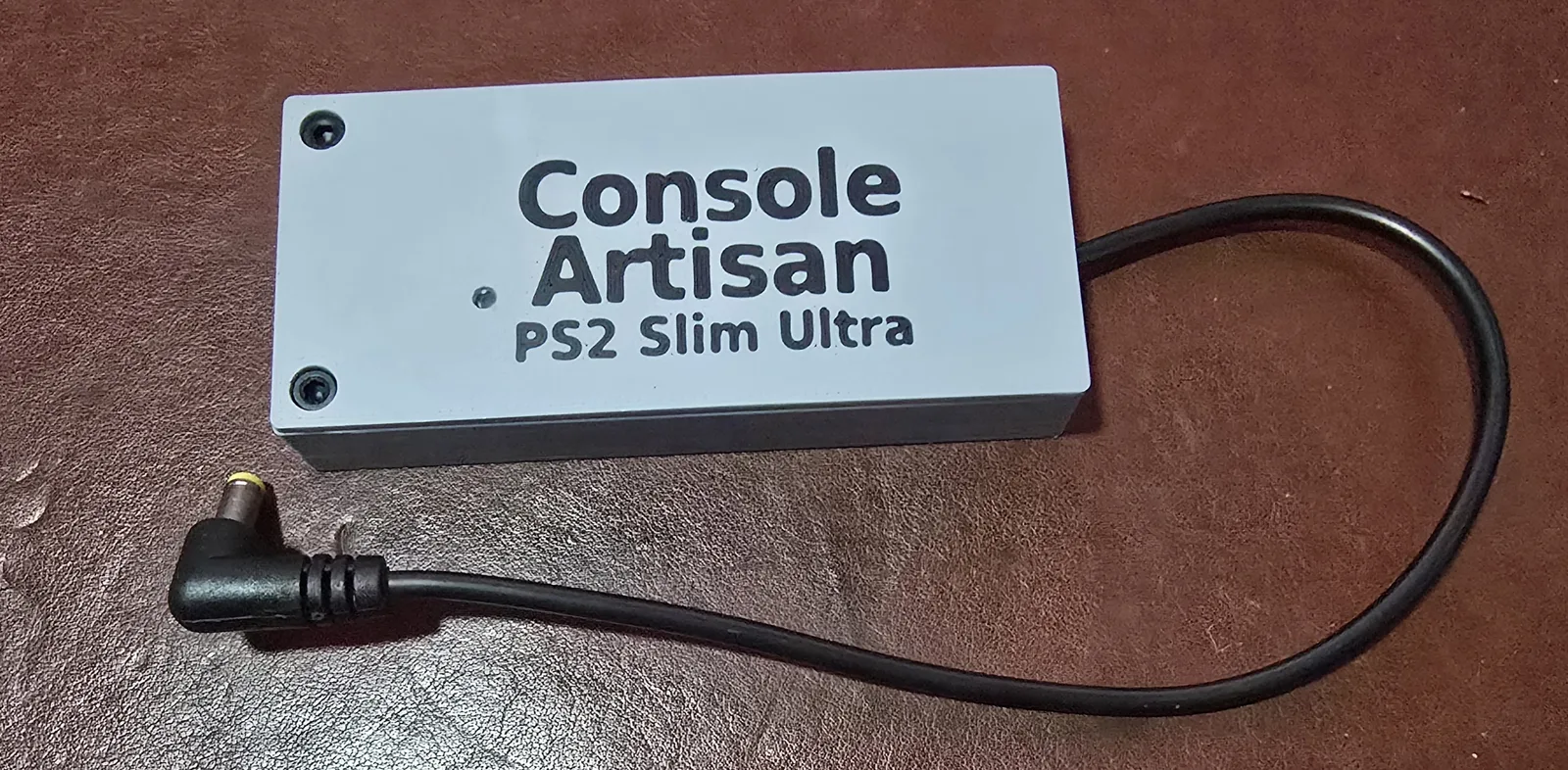
USB-C Power Supply for PlayStation 2 Slim: Run a PS2 From a USB-C Port or Battery (PS2 Slim Ultra)
48 watts out of a USB-C cable. USB-PD 20V in, regulated 8.4V at up to 6A out. Built to order, one at a time.
Power your PlayStation 2 on a USB-C PD port or battery
A PS2 Slim runs on 8.5 volts and Sony rated its adapter at 5.65 amps. That is 48 watts, which is why the original supply is a brick with a wall plug on the end of it, and why the twenty-dollar replacements are also bricks with wall plugs on the end of them. If you want to run one off a battery you are looking at an inverter and a car.
This one takes 48 watts out of a USB-C cable. Any USB-C PD source rated 65 W or better will run it, which covers most laptop chargers, most GaN bricks, the USB-C port on a lot of monitors and docks, and any power bank in that class. Plug it into a bank, pair it with a portable LCD, and you have a PlayStation 2 on a tray table, in a hotel room, or in the back seat, which as a kid I assumed was something only rich people got to do.
What makes it an Ultra
The Ultra line is where I stop designing for cost. A Game Gear runs on an 8.5 watt brick and the parts that do that job are cheap and dull. A PS2 Slim wants six times that, continuously, out of something you can hold in one hand, and very little in the usual hobby parts bin will survive it.
The regulator is a Pololu D42V110F8, and it is the best switching converter I have had on my bench. Two-phase synchronous buck, fixed 8.4 V, rated to 10 amps, so a PS2 pulling under 6 never gets out of its comfort zone. Pololu publishes “more than 90% typical” efficiency. Sealed inside this case, at full console load, I measured 93.8%. Very little hardware beats its own datasheet. Cheap modules do the opposite: they sag as they warm up and sag again as you load them. I measured this board’s 9 V twin at 94 to 95% and flat from 2.8 amps all the way to 6.2, and sitting in open air at 6.18 A it ran 50 C on the top face and 47 C on the bottom. Three degrees across the whole board, which is a converter spreading its own heat about as well as something that size can.
Pololu builds these in-house at their Las Vegas facility. What gets sold elsewhere as a “10 A module” is usually a 10 A chip on a board that cannot deliver 10 amps. I have had “3A” boards trip at 750 mA.
The USB-C side is a CentyLab PPSTrigger V1.2, from a small shop in Salem, Oregon, strapped to ask for a fixed 20 volts. The one-dollar trigger boards that go in cheap adapters fall over on strict chargers. I have reproduced that on my own bench: they boot-loop on an Anker Prime station and get refused by a MacBook’s ports. I put this one on a USB-PD protocol analyzer and watched it request the fixed 20 V contract and take it.
And you can watch it happen without any of my equipment. The LED on the lid comes on dim when you first plug the USB-C cable in, running on the 5 volts every port hands out before anything is negotiated. When the 20 volt contract lands, it visibly brightens. If it lights and stays dim, the negotiation did not go through and your charger is the problem, and you know that before the console is involved. The catch is that it is the change you are looking for: come back an hour later and a dim LED and a bright one are hard to tell apart with nothing to compare against.
The case is printed in ASA, not PLA and not PETG. ASA is what outdoor gear gets made from. It holds its color and its strength under UV instead of going yellow and brittle, which you may have opinions about if you have looked closely at the console this plugs into.
What I measured
I ran it sealed, on a resistive load, for 49 minutes, until the numbers stopped moving.
- 51.15 W in at 19.98 V, delivering 5.7 A out. That is 93.8% efficient with the lid on, which beats the converter’s own published typical figure.
- 8.42 V at the converter and 8.10 V at the plug under that load.
- 81 C at the hottest point inside, on one of the converter’s inductors, with the sealed case sitting at 54 C outside. ASA softens around 100 C.
- Sony’s own PS2 power supply boards have been bench-loaded at 8.45 V open circuit and 8.2 V at 5 amps. Mine delivers roughly 8.2 V at 5.7 amps. Same load line as the factory part, at more current.
Will it work with my PS2?
Yes for the SCPH-70000, 75000, 77000 and 79000 series. That is every Slim with a round DC jack on the back.
No for the SCPH-90000 series, which went back to an internal power supply and has a mains socket where the DC jack used to be. No for the original fat PS2, for the same reason.
The plug is EIAJ-03, 4.8 x 1.7 mm, center-positive. Three different voltages in my lineup share that exact plug, so the voltage is printed on the case. Read it before you plug anything into anything, mine included.
What you need
Any USB-C PD source rated 65 W or better, which includes wall chargers, GaN bricks, laptop chargers, the USB-C port on many monitors and docks, and power banks. The requirement is that it will hold 20 volts at 3 amps on the port you plug into. 100 W is what I would buy, because it leaves headroom.
Any 60 W or 100 W USB-C cable is fine. The supply pulls 2.56 amps, so there is no need for a 5 A e-marked cable.
Running on a battery
| Bank | Cell energy | Roughly |
|---|---|---|
| 10,000 mAh | 37 Wh | about 30 minutes |
| 20,000 mAh | 74 Wh | about 1 hour |
| 27,000 mAh | 100 Wh | about 1 hour 20 |
Two notes on that table. Most 10,000 mAh banks cannot do 65 W at all, so check the bank’s rating and not just its capacity. And 27,000 mAh is about 100 Wh, which is the airline carry-on limit, so that row is the largest battery you can take on a plane, which is probably not a coincidence if you are reading this page.
If you are running a screen off the same bank
Put the screen on the second port, and know what that costs you. Banks re-divide their power budget when a second port is occupied, and some drop the 20 V option entirely once that happens. The part that matters in practice: plugging or unplugging the monitor forces a renegotiation, which will reset the console mid-game.
So if portable play is the actual goal, use two banks, one per load. You get a full budget on the console port, no renegotiation when you touch the screen, and better total runtime. It is electrically fine: both banks float, and the console’s video cable already ties the two grounds together.
Built to order
Nothing about this one sits on a shelf. I designed it for one customer with one specific problem, in my garage, and then built it: printed case, hand-wired harness, every unit run on the bench under a real 48 watt load before it goes in a box.
Very few of these exist. Order one and I build one, and the number of them in the world goes up by one.
Allow one to two weeks.
The gory details
Why 8.4 V and not 9. The Slim’s input feeds a 78M05-family linear regulator for its 5 V rail, and a linear regulator burns the difference as heat forever. At 9 V it drops 4.0 V, at 8.5 V it drops 3.5 V, so running slightly under spec puts 14% less heat inside a twenty-year-old console than running slightly over. Sony’s own supply sags to 8.2 V at 5 A anyway. Being a little under is fine here and being over is not.
Why the output cable is thick. At 6 amps, the 26 AWG wire I use on the 2 A dongles would drop about 1.6 V over a metre round trip and be useless. This one runs heavy gauge, and the remaining drop from converter to plug is about 35 milliohms, most of which is the wire itself.
Two handling notes that ship with the unit. Plug the barrel into the console first, then power the supply, so you are not making the connection with 8.4 volts already live on it. And do not run it inside a closed AV cabinet: the inductor reaches the case material’s softening point somewhere around 48 C ambient, which no room will do and a sealed cabinet full of hot gear might.
Other adapters in the lineup: the PSone Ultra does the same trick at 7.5 V for a PSone and its clip-on screen, and the Game Gear and TurboExpress dongles handle the handhelds.
Specifications
| Compatibility | PlayStation 2 Slim, SCPH-70000 / 75000 / 77000 / 79000 series. Not the SCPH-90000 series and not the original fat PS2, neither of which has a DC input jack. |
|---|---|
| Connector | EIAJ-03 4.8 x 1.7 mm barrel, center-positive, on a right-angle plug |
| Efficiency | 93.8% measured sealed, 51.15 W in for 48 W out |
| Enclosure | Printed in commercial-grade ASA (UV-stable, will not yellow or go brittle), captive nuts, internally clamped boards, 44.3 x 96.8 x 14.8 mm |
| Included | One (1) tested power supply, built to order. No USB-C charger, cable, battery bank, console or screen. |
| Input | USB-C Power Delivery, fixed 20 V. Requires a 65 W or larger USB-PD charger or power bank; 100 W recommended. |
| Output Voltage | 8.4 V nominal, up to 6 A. Measured 8.42 V at the converter and 8.10 V at the plug under a 5.7 A load. |
| Thermals | 81 C peak internal on an inductor after a 49-minute sealed soak at full load, case exterior 54 C at equilibrium |
| Topology | USB-PD trigger strapped to a fixed 20 V contract, feeding a two-phase synchronous buck converter (Pololu D42V110F8, 10 A rated) |
Similar items
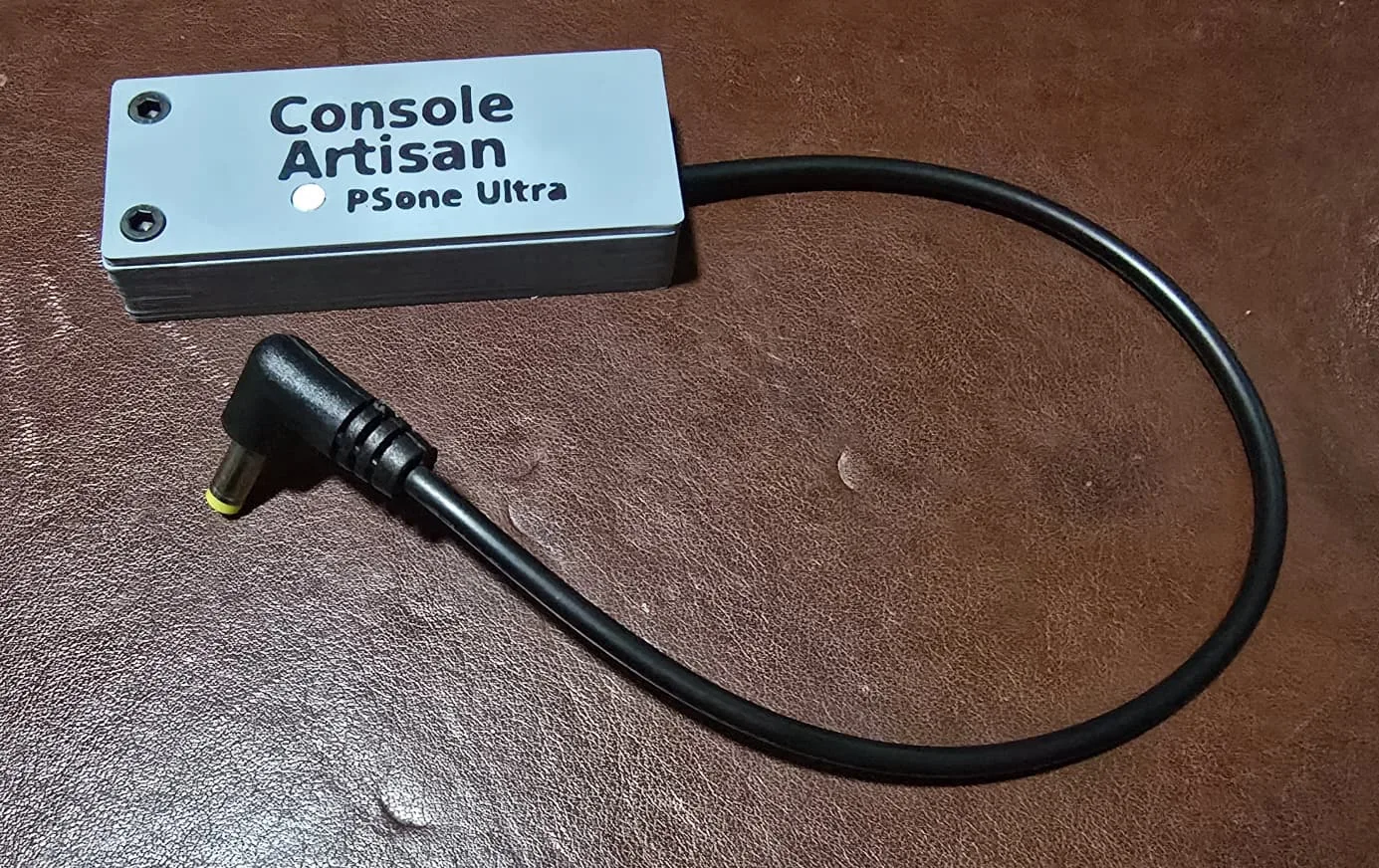
USB-C Power Supply for Sony PSone: Run the Console AND Its LCD Screen (PSone Ultra)
The only USB-C supply built to carry a PSone and its clip-on screen together. USB-PD 15V in, regulated 7.5V at 2A out. Built to order.
$95.00
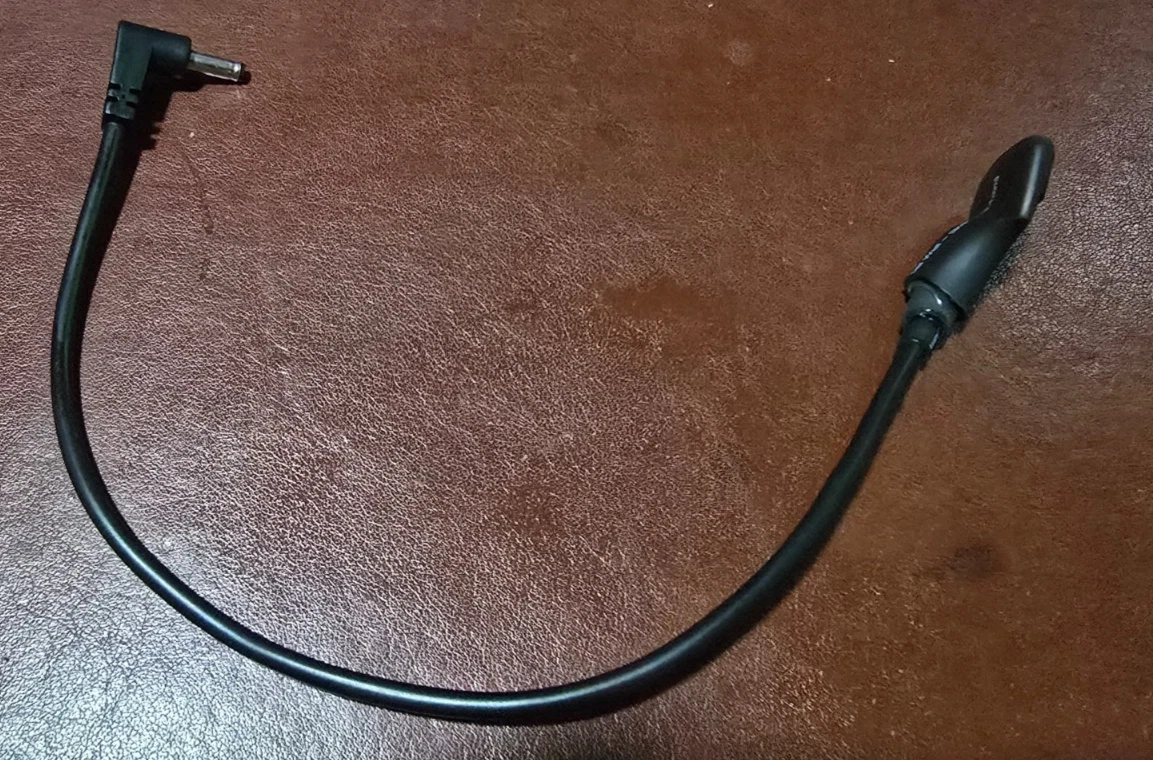
Prototype USB-C Power Adapter: Sega Game Gear or Nintendo Game Boy (Working Seconds)
Fully working early-build dongles from surplus stock. Looks vary (heatshrink or an early case), function is identical.
$10.00 (plus 1 other variant)
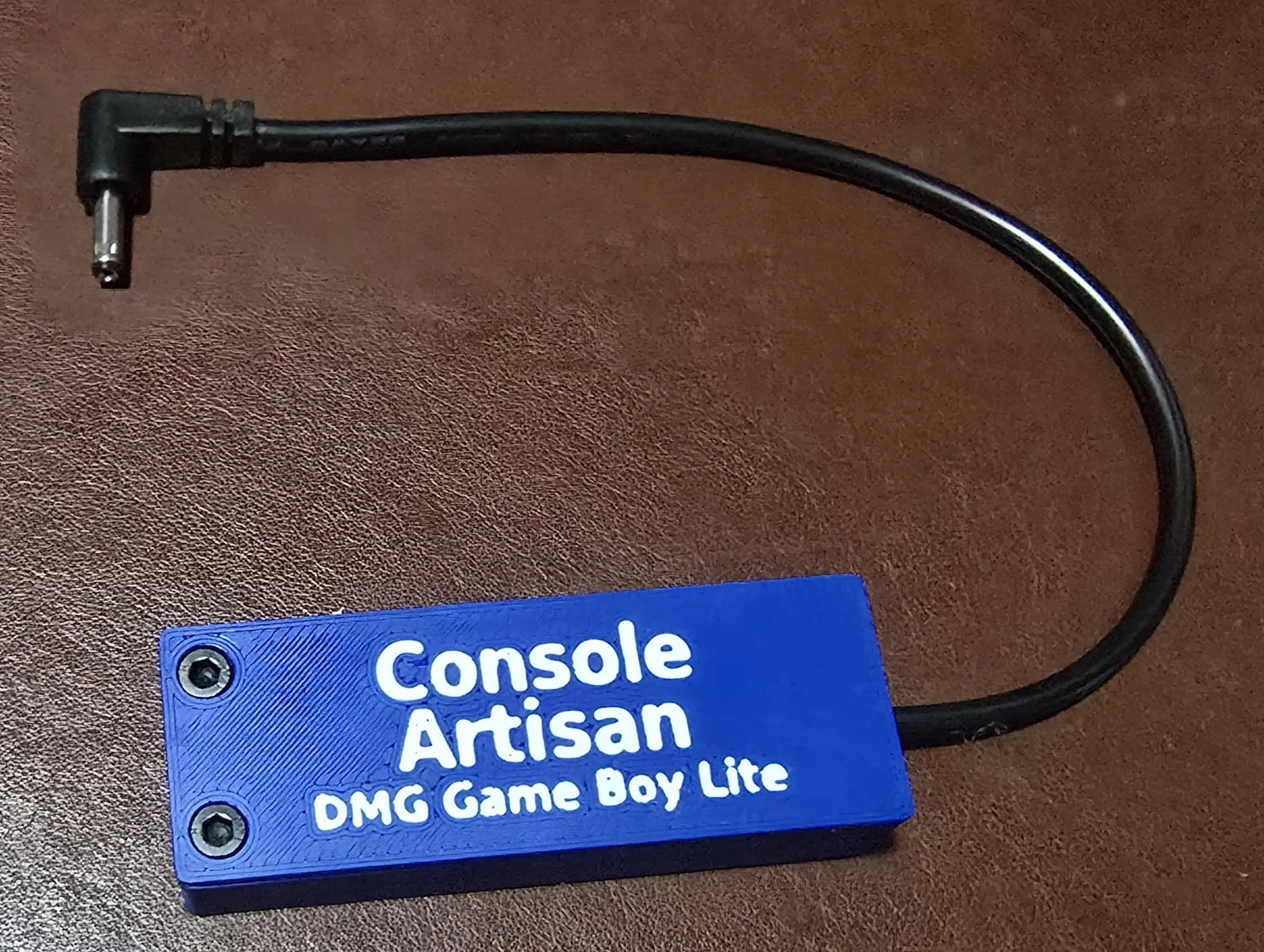
USB-C 5V Power Adapter for Original Nintendo Game Boy (DMG-01) (Lite)
Hand-built and enclosed. Runs on any 5V USB port. No USB-PD required. The simple, best-value way to power a DMG.
$20.00
USB-C 6V Power Adapter for Original Nintendo Game Boy (DMG-01)
Hand-built, enclosed, and labeled. True factory 6V from any 5V USB port. No USB-PD required.
$30.00