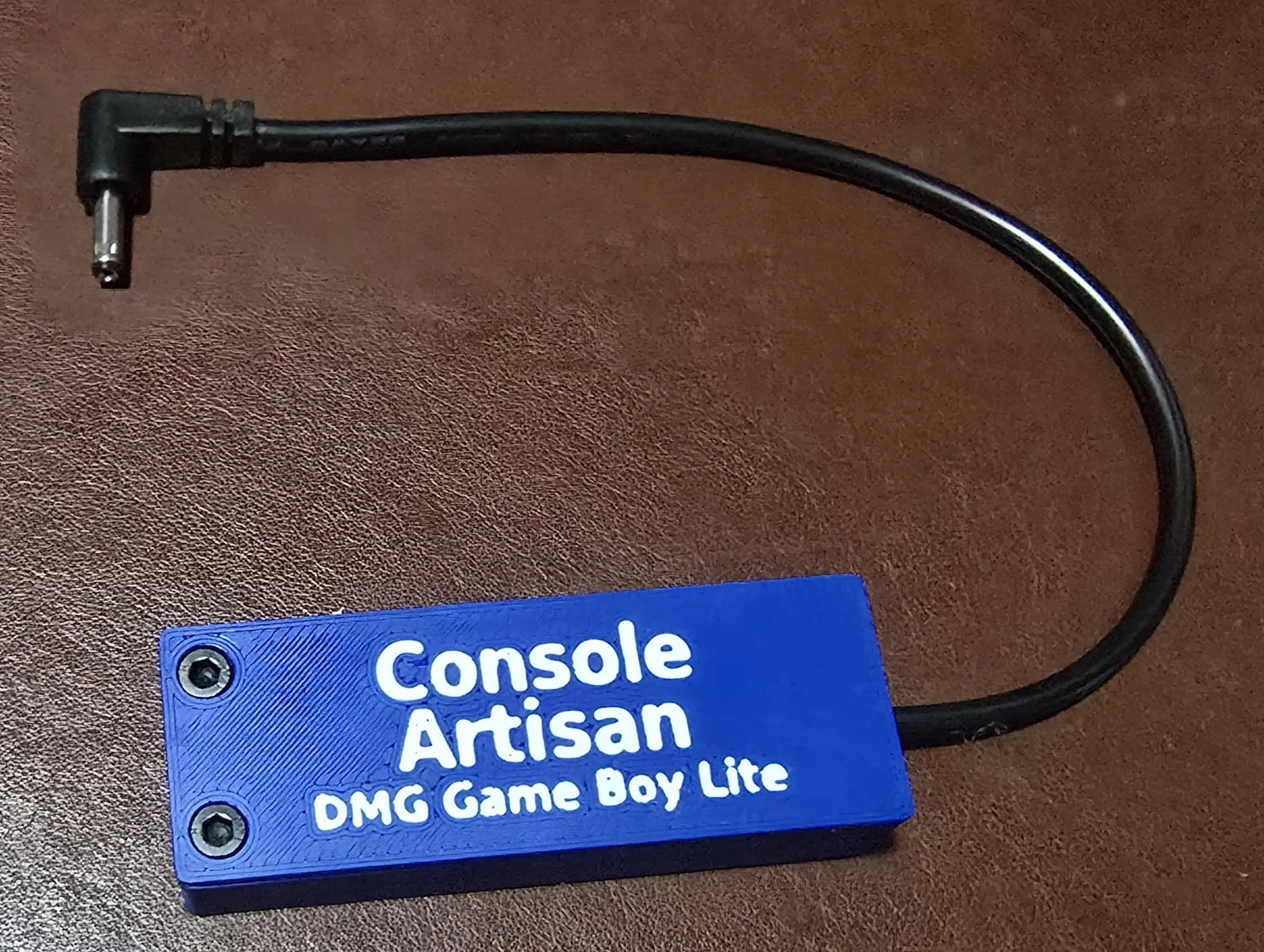
USB-C 5V Power Adapter for Original Nintendo Game Boy (DMG-01) (Lite)
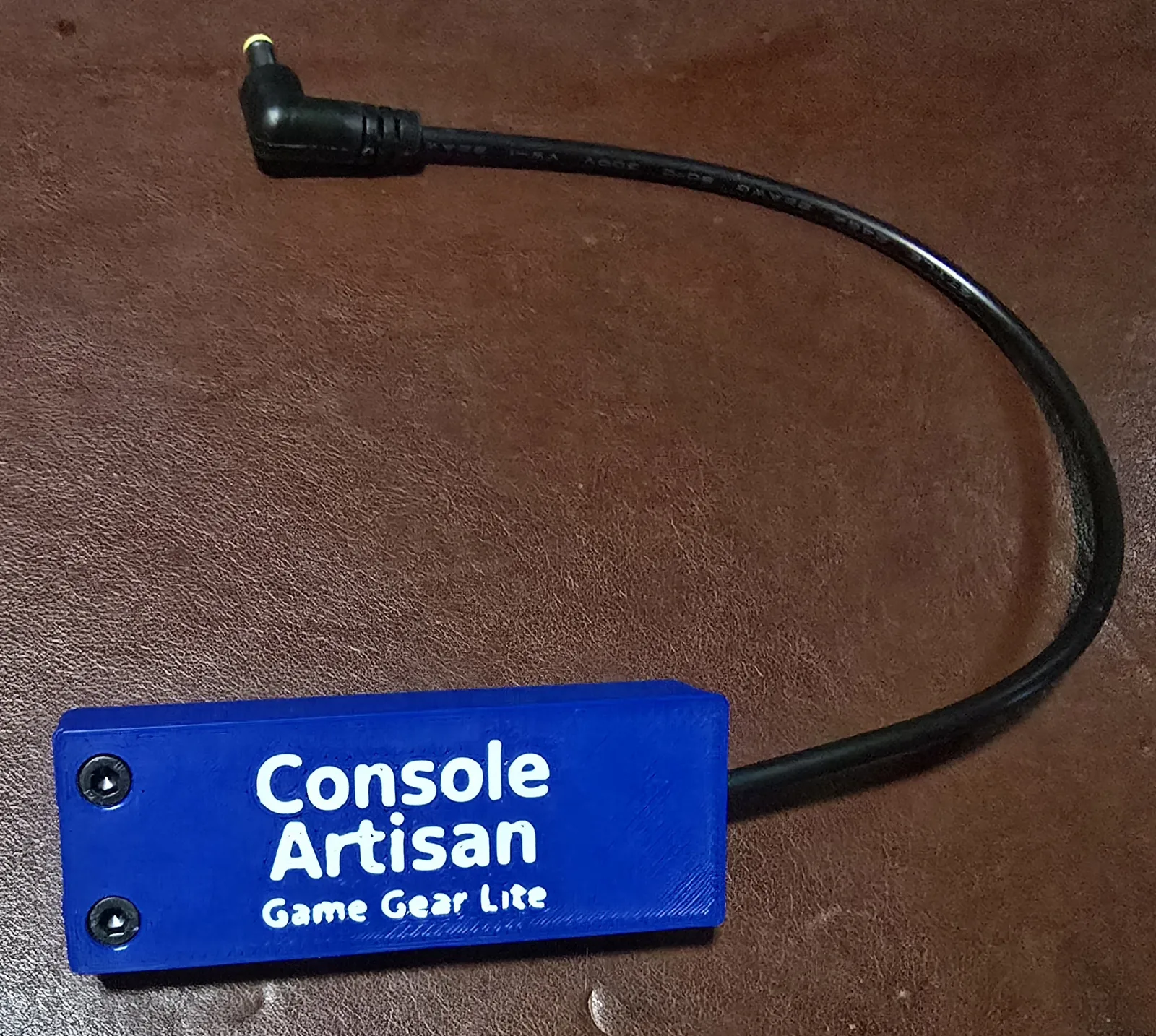
Hand-built and enclosed. Runs on any 5V USB port. No USB-PD required. The simple, best-value way to power a DMG.
$20.00
Buy 2 or more dongles and take 15% off. Mix and match any models in the lineup.
Power your original Game Boy with modern USB-C, the simple way
Ditch the bulky, aging power brick and the AA batteries. This is a brand-new, custom-built power adapter that lets you run your original Game Boy (DMG-01) from any standard USB-C or USB-A port. This is the “Lite” version: the DMG is happy on a straight 5V supply, so this one skips the boost converter entirely and passes 5V right through: the simplest, best-value way to keep the original Game Boy powered. And because the DMG only needs 5V, this Lite needs no USB-PD at all, unlike the Game Gear and TurboExpress Lite adapters, which use a PD trigger and require a PD source. This one runs on any plain USB port.
It includes the proper CC resistors so it signals modern “smart” USB-C sources to turn on: many cheap adapters omit these and silently fail to draw power. This one just works, with any compliant USB-C cable and source, and with plain USB-A too.
Transparency matters to me, so here’s exactly what you’re getting: these adapters are hand-built in small batches to one consistent spec, so the photos are representative of what will arrive: same components, same enclosure, same build, same testing, unit to unit. The only thing that varies is cable length (about 6 to 18 inches, depending on the barrel jack I have on hand); if you need a particular length, just ask before ordering. Your satisfaction is what matters most to me, and I’m always glad to answer questions before or after a sale.
What’s included
- One (1) custom-built, enclosed USB-C 5V power adapter (Lite) for the original Game Boy (DMG-01).
- Adapter only. This does not include a USB-C power brick, a USB-C cable, or a console.
Why 5V is perfect for the DMG
While the Game Boy nominally runs on 6V (four AA batteries), it was designed to keep running as those batteries drain, reliably down to roughly 4.8V. A stable 5V supply sits comfortably in that range and is completely safe. In fact the DMG sips so little power (I measured about 50 mA at 5V) that many USB power meters barely register the draw. A typical 10,000 mAh power bank will run a Game Boy for 70-80 hours on a single charge.
- Runs on anything. Any 5V USB-C or USB-A port: phone chargers, laptops, power banks, car ports, dumb bricks. No Power Delivery (PD) required.
- Right-angle connector keeps the cable tucked out of the way and off the side-mounted power port. (Want the exact factory 6V instead? See the standard boost version.)
- Note on multi-port chargers: many briefly cut power to all ports when another device is plugged in or removed. Avoid hot-swapping while playing.
This one, or the 6V version?
For most Game Boys (stock, or modded with an IPS/backlight screen), this Lite is all you need, and it runs on any USB-A or USB-C port. Consider the standard 6V version only if you run a heavy mod stack (a backlit IPS and a flash cart together), want the output held at a steady 6V regardless of your cable, or simply want the console fed at its factory voltage. It won’t look or sound any different: the Game Boy makes its own internal 5V either way; the 6V just adds power headroom for a hungry build.
Built and tested by hand
- Enclosed and labeled. A case 3D-printed in commercial-grade ASA (a UV-stable plastic that won’t yellow or get brittle) with captive nuts holds everything together, clearly marked with voltage and polarity.
- Foolproof internal strain relief so the solder joints never take a pull.
- Verified on the bench. Each design is proven on real hardware; every unit gets a final output-voltage check before it ships.
Compatibility
Uses a center-NEGATIVE, right-angle 3.5 x 1.35 mm barrel jack, built specifically for:
- Original Nintendo Game Boy (DMG-01)
Please note: the Game Boy Pocket, Game Boy Color, and Game Boy Advance use different power connectors and are not compatible. And critically, the original Game Boy is center-negative, the opposite polarity of an NEC TurboExpress even though they share the same plug size. Do not cross-use a TurboExpress adapter and a Game Boy adapter. The labeled enclosure is there specifically to prevent that mixup.
An excellent troubleshooting step
Seeing rolling lines on the screen or hearing a hum from the speaker? Those symptoms are often caused by an aging original power supply. Feeding the console clean, regulated voltage from a modern USB source is a great first step: if the issues clear up, your old power source was the culprit; if they persist, it is a sign the console itself may need internal servicing (a re-cap).
Custom orders
Need a larger quantity or a custom build? Send a message. I can accommodate specific cable lengths, different barrel sizes or polarities, and other output voltages.
About the maker
I’m an electrical engineer and long-time hobbyist with a passion for vintage electronics, especially classic video games. The items I sell are projects from my personal workshop. All items are guaranteed working on arrival and in the state described. Thanks for looking.
Specifications
| Cable Length | ~6 to 18 in depending on sourced jack (specify if you need a length) |
|---|---|
| Compatibility | Original Nintendo Game Boy (DMG-01) ONLY. Not Pocket / Color / Advance. |
| Connector | 3.5 x 1.35 mm barrel, center-NEGATIVE, right-angle |
| Enclosure | Printed in commercial-grade ASA (UV-stable, won't yellow or get brittle), captive nuts, labeled voltage/polarity, internal strain relief |
| Input | Any 5 V USB port, USB-C OR USB-A. No USB-PD negotiation required. |
| Output Voltage | 5 V straight passthrough (the DMG runs reliably down to ~4.8V, so 5V is safe and effective) |
| Topology | USB-C breakout with built-in CC resistors (direct 5V passthrough, no boost) |
Similar items
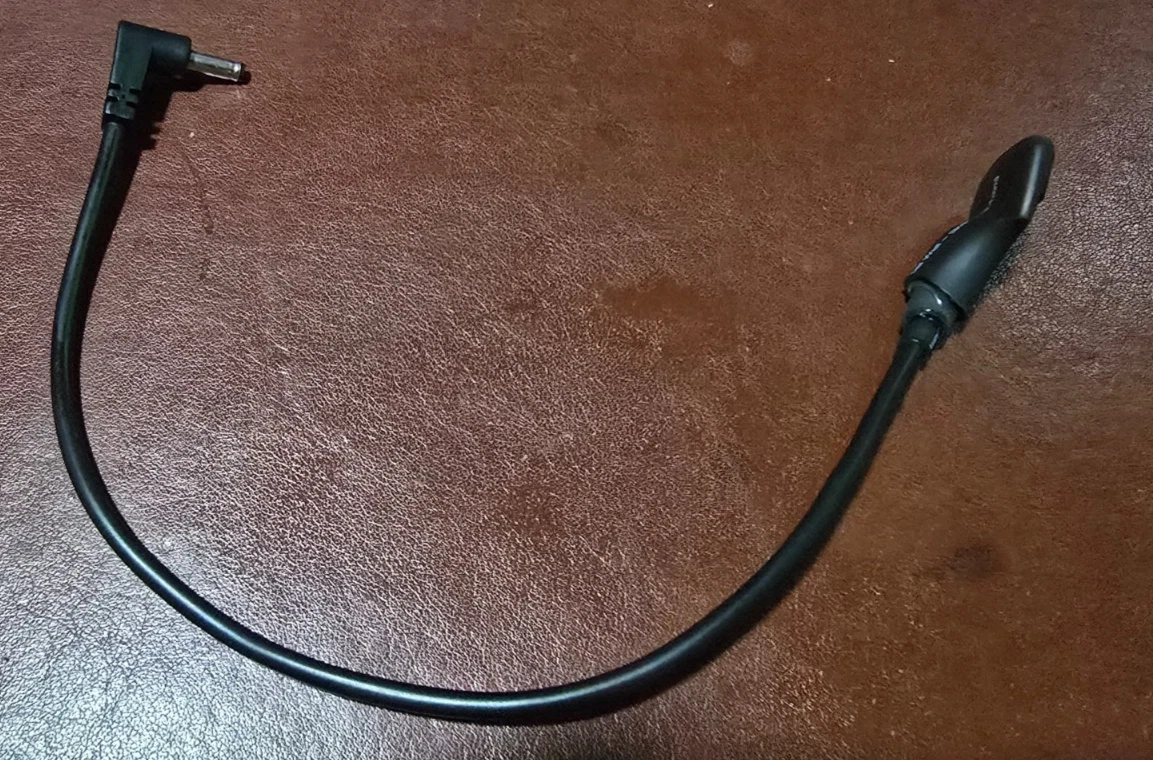
Prototype USB-C Power Adapter: Sega Game Gear or Nintendo Game Boy (Working Seconds)
Fully working early-build dongles from surplus stock. Looks vary (heatshrink or an early case), function is identical.
$10.00
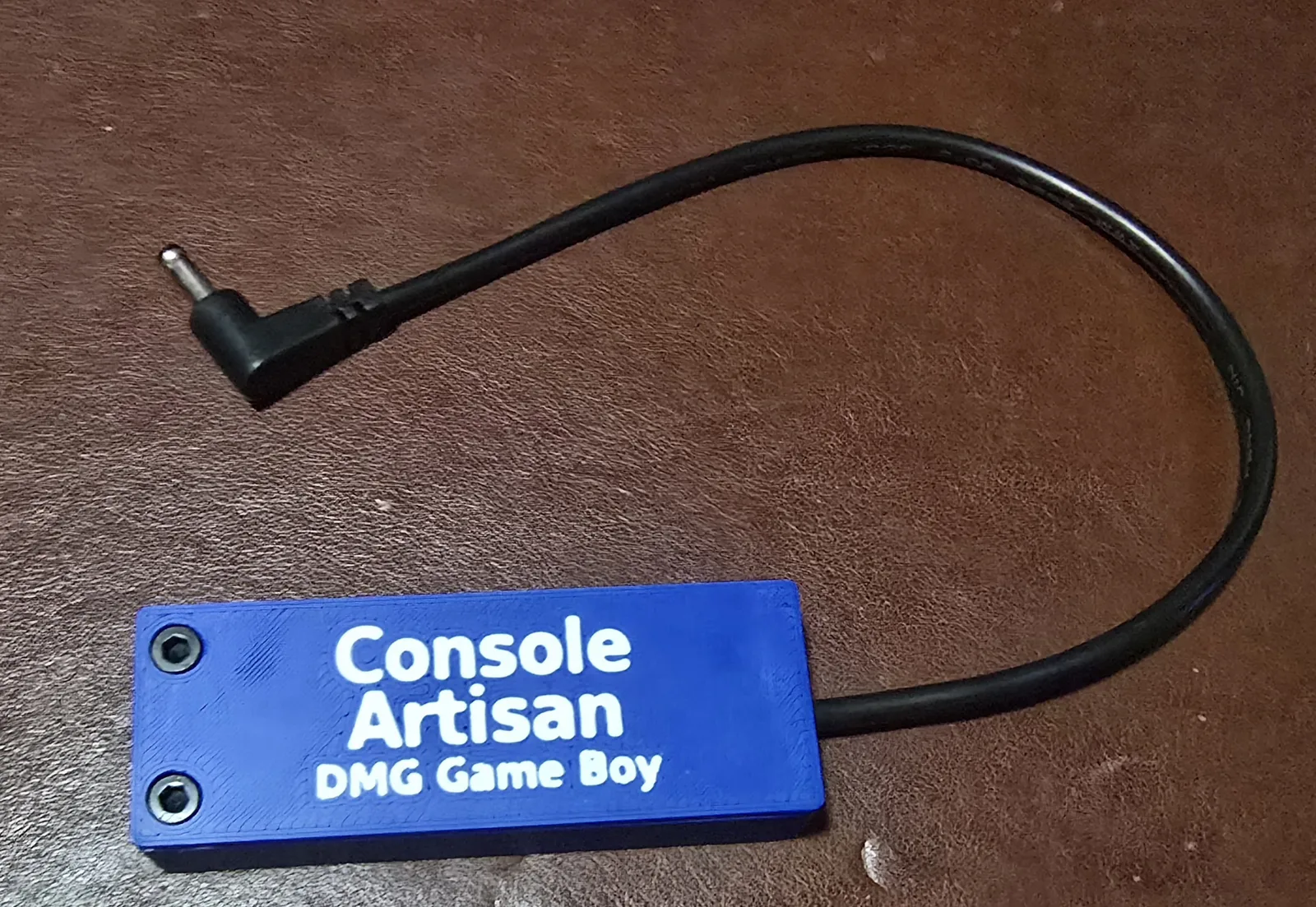
USB-C 6V Power Adapter for Original Nintendo Game Boy (DMG-01)
Hand-built, enclosed, and labeled. True factory 6V from any 5V USB port. No USB-PD required.
$30.00
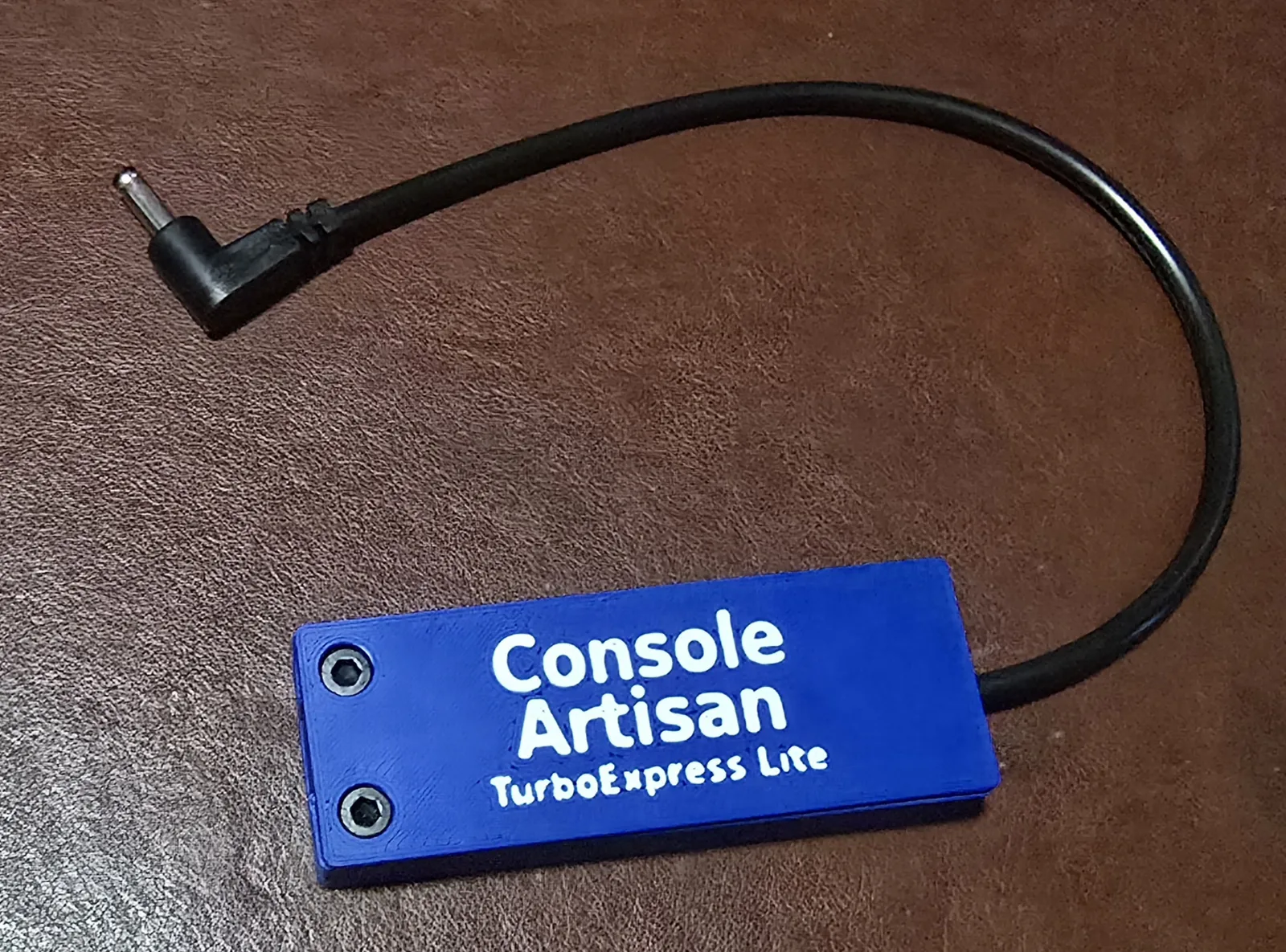
USB-C PD 9V Power Adapter for NEC TurboExpress & PC Engine GT (Lite)
Hand-built and enclosed. Budget Lite version: uses a USB-C PD trigger; needs a 9V-capable USB-C PD source.
$20.00
USB-C PD 9V Power Adapter for Sega Game Gear (North America), Genesis 2, 32X & Nomad (Lite)
Hand-built and enclosed. Budget Lite version: uses a USB-C PD trigger; needs a 9V-capable USB-C PD source.
$20.00